Showing posts sorted by date for query ku klux klan. Sort by relevance Show all posts

Thursday, August 27, 2015

Benton, Mt. Vernon book signings set for Tuesday

Jon Musgrave at Giant City Lodge last Sunday afternoon.
Southern Illinois historian Jon Musgrave of IllinoisHistory.com and Shelton Gang granddaughter and novelist Ruthie Shelton will be signing books next Tuesday, Sept. 1, in Benton at The Buzz during lunch time and at King City Books in Mount Vernon later that afternoon.

Bruce Cline, founder of the Little Egypt Ghost Society and author of History, Mystery and Hauntings of Southern Illinois published by IllinoisHistory.com, will also attend the signing at The Buzz.

The first sign will run from 10:30 a.m. to 1 p.m. in Benton and the second will take place from 3 to 6 p.m. in Mount Vernon.

Ruthie and I came out with Inside the Shelton Gang: One Daughter's Discovery two years ago after a number of years of research individually, and then working together. She is the daughter of "Little Carl" Shelton, one of the nephews involved the Shelton Brothers gang that ruled downstate Illinois crime from the end of the Prohibition Era to the 1940s.
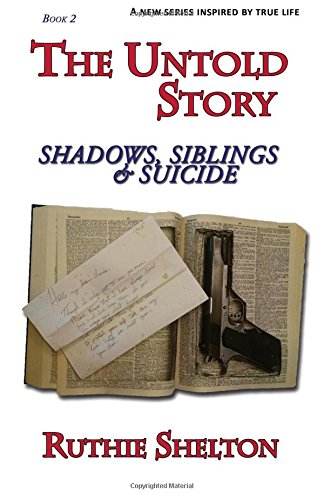
Since then she has written two small novels that have been inspired by her father's generation in the mid 20th Century.

Dubbed The Untold Story series, Volume 1, Death, Deceit and Discovery introduces the Callahan family, once considered to be the most influential, violent, and prosperous crime organization in the Midwest. Vol. 2, Shadows, Siblings & Suicide picks up the story a decade later when the wrongs of their pasts leads to insanity, murder and suicide in the present.

I will have all of my published books there except the one on the Old Slave House. That one is out of print at the present. What I will have include the following:
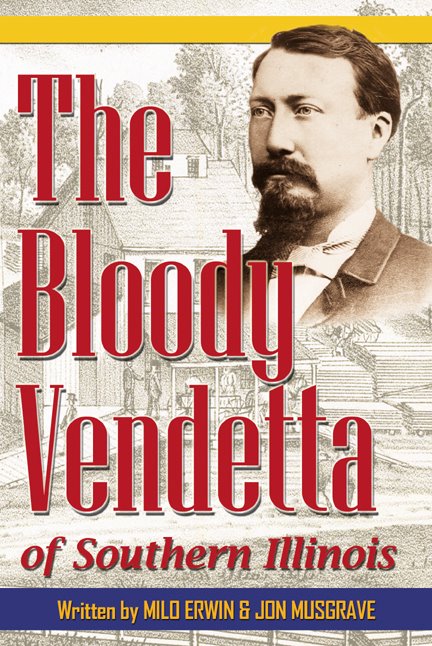
  • The Bloody Vendetta of Southern Illinois - Co-authored with Milo Erwin this prequel to Bloody Williamson covers the post-Civil War violence in the region and the first generation of the Ku Klux Klan that wrecked havoc with their enemies.

  • Secrets of the Herrin Gangs - Co-authored with Ralph Johnson, the business manager for Ruthie's uncles in the Shelton Gang in Herrin during the 1920s. At the end of the Gang War he needed to get out of town and needed some money so he went to St. Louis and sold his story to the newspapers that eventually went nationwide in a 10-part series. Half of the book is his insider account of the Klan War and the Gang War of the 1920s and the other half is my research into Ralph's actual identity and criminal history as he was writing under an alias.
I also will have three books that I've edited.
  • The Boy of Battle Ford - Written as an autobiography by W. S. Blackman at the turn of the 20th Century, this book cover his growing up on the Southern Illinois frontier in the 1840s and 50s, but mostly focuses on his time during the Civil War as a Union soldier. I've added a new introduction, footnotes and an index.

  • Handbook of Old Gallatin County - This includes the 1887 history of Gallatin County plus everything we could find from other 19th and early 20th Century history books about the parent county of most of southeastern Illinois. It's great for genealogists. More than 250 biographical sketches are included.

  • Lincoln: Fresh from Abraham's Bosom - This collection of stories told by America's 16th president was first compiled and published in 1864 when he ran for re-election. I've added a new introduction, footnotes and an index.
In addition to all of the above books I will also have James T. Carrier's five books that he's written on aspects of mostly-Franklin County history, though a couple of titles are also of a more general interest.

Mr. Carrier is a retired 95-year-old educator and writer who lives in the county but no longer gets out much. IllinoisHistory.com has been distributing his books since last year. His books are as follows.
  • A Little Bit of Heaven and a Whole Lot of Hell - covers growing up during the Depression in a small coal mining settlement.

  • Black Christmas Mine Disaster - focuses on the 1951 Orient No. 2 Mine disaster outside West Frankfort.

  • Killer Tornado - includes interviews with family members and survivors of the 1925 Tri-State Tornado that ripped through Franklin County, as well as an earlier tornado that hit Pershing.

  • Them Good Old Wild Greens - combines an edible plant guide with stories from the Great Depression.

  • Wilderness Survival - combines a practical guide to living off the woods with stories and activities from surviving the Great Depression in the Southern Illinois. 
If you can't make either event you can always order the books here on the website by just clicking the book link on the side, or going to IllinoisHistory.com/books. If you order direct all of my books will always be signed.

Thursday, September 08, 2011

The Black Hand and the West Frankfort Riot

I'm working on a new book — think of it as another bite-size morsel of Bloody Williamson — but this time of a chapter of Southern Illinois' history that's been all but forgotten. It's a chapter that Paul Angle should have included in his book but missed because Oldham Paisley didn't include newspaper clippings of it in his scrapbooks.

You see, two years before the Herrin Massacre, three years before the rise of the Ku Klux Klan, four years before the Klan War, five years before the rise of Shady Rest, six years before the Gang War, seven years before the big media trials and eight years before Charlie Birger's hanging, there was the West Frankfort Riot.

It had all the ingredients of what happened later — vigilante justice, riots in the streets, striking miners, anti-Italian mobs, gruesome murders, well-publicized trials, a hanging in Marion's Paradise Alley and, of course, organized crime.

In many ways it was just the latest wave of violence that had rippled through the region in the decade or so before national Prohibition. It had been fueled in part by factions and elements of the Sicilian mafia emigrating to the Egyptian Coal Belt.

Known also as the Black Hand, they extorted and killed, bombed and harassed both fellow Italians and their American neighbors. Their actions, and the counter-actions they generated, left a trail of distrust and bloodshed that stained the region's name.

The book's title will most likely be "'DeSantis the Doomed' and the Curse of the Black Hand." The name's inspired a booklet published in 1921 following the hanging of Settimi DeSantis. A Williamson County court ordered the death sentence for his role in a double murder south of Royalton the year before.

The picture above is him just minutes before his death as the Catholic priest, Father Seneese of Herrin, gives him comfort. I believe it's Sheriff Melvin Thaxton in the back (though I'm still trying to confirm that). The photo is an enlargement of one of four in the possession of the Williamson County Historical Society in Marion.

West Frankfort, Johnston City, Willisville and Whiteash were just some of the communities that saw bloodshed. I'm still looking for descendants of some of residents, victims and participants of that time period for additional stories and photographs. Anyone with more info please contact me.

Wednesday, January 05, 2011

This Day in Illinois History - Jan. 15

On this day in Illinois history, Jan. 15, 1924, Williamson County Sheriff George Galligan asked Gov. Len Small to withdraw state militia troops from the county.

The sheriff had requested troops following government-led raids staffed by hundreds of members of the Ku Klux Klan against bootleggers and others in Herrin and surrounding communities

Though sanctioned initially by federal authorities, incidents of abuse that took place in the raids had risen to the level of diplomatic complaints by the counsels of France and Italy on behalf of their citizens in the county.

Anti-Klan sentiments had risen and the sheriff (with this two full-time deputies) had no way to guarantee the public safety.

Klan and anti-Klan forces negotiated and worked out an agreement on the night before at a meeting at Herrin City Hall. On the 15th at 11 a.m. Galligan made his request to the governor to remove the troops.

Over the next few days he and his men conducted raids on bootleggers, but received no help from Klan supporters or their hand-picked local police.

The peace lasted six days when the Klan violated the agreement and began raids of their own.

After additional raids and reprisals, chaos erupted early in February and the governor ended up sending nearly a thousand troops to control the county.

Tuesday, August 04, 2009

Bloody Williamson Firepower Returns

Two keys pieces of the firepower used during the days of Bloody Williamson have returned to Southern Illinois for the first time in more than 80 years.

S. Glenn Young was famous for his Thompson machine gun, his World War I era rifle, and his pearl handed revolvers. As head spokesman and gunman for the Ku Klux Klan in this area from 1923 to January 1925, Young ranks was one of the leading figures of that violent era.

Two of his weapons were recently bought from his daughter and grandson, the latter I had the opportunity to meet in June. Look for an announcement or two in the next few weeks as to what museum will take them on display.

I know the answer of course, but it's not my place to make the announcement. The revolver was last fired on the night Young was killed.

Tuesday, November 22, 2005

Making Bloody Progress

This morning between the hours of midnight and 4:30 a.m. I finally was able to make some progress on wrapping up my latest book, The Bloody Vendetta of Southern Illinois.

I'm still a couple of chapters away from completion.

This was supposed to have gone to the printers earlier this month, but a drunk drver changed my plans.

Between the pain medication that's prevented me from concentrating to the one-handed typing, it's been diffiucult to get back in the mode of writing.

I'm still shooting for the book to be available by early to mid-December in time for Christmas.

From the back cover:

In the 1870s the Bloody Vendetta wreaked havoc in the heart of Southern Illinois leaving a half dozen men assassinated and property values in freefall. As a defense attorney Milo Erwin represented many of the suspects involved. Following the trials of 1875 and 1876, Erwin published the first detailed account of
the Vendetta. Now Jon Musgrave pieces together the rest of the story, combining Erwin's work with contemporary newspaper accounts as well as modern research. From the rise and fall of the Ku Klux Klan as they took advantage of the chaos, to the
events of what happened after Erwin wrote his book, Musgrave connects the dots from the Vendetta to the Civil War era Aiken Gang to the second generation of outlaws including the ill-famed Jennings Gang of the Wild West and later Hollywood, to the
robberies and murder in the Carterville and Carbondale area of the mid 1890s.

The book will be a 6" x 9" paperback, at least 224 pages and will retail for $14.95. (ISBN: 0-9707984-6-6)